Polish
  English
  Romanian
  Portuguese
  Italian

Dążąc do osiągnięcia szczytowych osiągnięć, hodowcy gołębi pocztowych nieustannie poszukują sposobów na poprawę wytrzymałości, regeneracji i ogólnej kondycji. Spośród suplementów, które zyskały znaczną popularność w ostatnich latach, L-karnityna wyróżnia się jako jedno z najcenniejszych narzędzi wspomagających wyniki sportowe. Produkty takie jak Top Form firmy Cest Pharma, zawierający 100 mg L-karnityny, stały się ważnym elementem wielu udanych programów lotowych. Chociaż korzyści płynące ze stosowania L-karnityny są niezaprzeczalne, zrozumienie, jak prawidłowo ją stosować, jest kluczowe dla osiągnięcia najlepszych rezultatów.
L-karnityna odgrywa kluczową rolę w systemie produkcji energii w organizmie. Jej główną funkcją jest transport kwasów tłuszczowych do mitochondriów, często nazywanych elektrowniami komórkowymi, gdzie tłuszcze te są przekształcane w energię użyteczną. Dla gołębi pocztowych proces ten jest szczególnie ważny, ponieważ lot długodystansowy w dużej mierze opiera się na metabolizmie tłuszczów. Im efektywniej ptak potrafi wykorzystać tłuszcz jako źródło energii, tym dłużej utrzyma swoją wydajność podczas wymagających lotów.
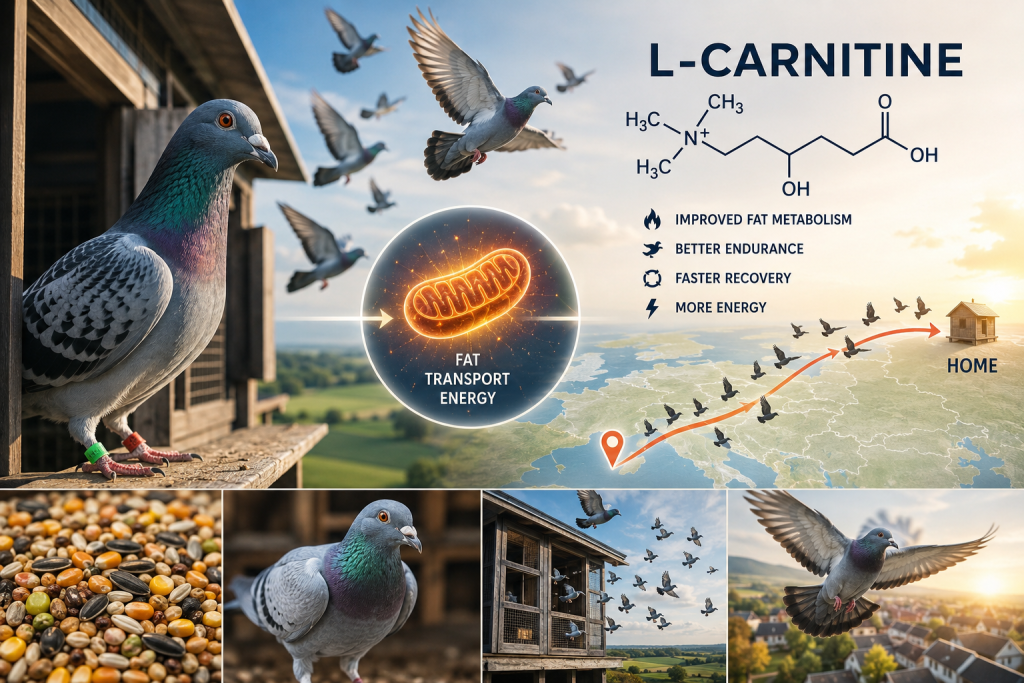
Stosowana w ramach odpowiedniego programu kondycyjnego, L-karnityna może znacząco poprawić wytrzymałość. Gołębie są w stanie efektywniej korzystać z rezerw energii, co pozwala im na dłuższe loty z mniejszym zmęczeniem. Wielu hodowców zauważa również, że ptaki otrzymujące L-karnitynę szybciej regenerują się po lotach i treningach. Zamiast pozostawać wyczerpane przez dłuższy czas, często szybciej odzyskują siły witalne i są gotowe do kolejnego wyzwania.
Jednym z powodów, dla których L-karnityna stała się tak popularna, jest jej zdolność do wspomagania gołębi w osiągnięciu szczupłej, atletycznej sylwetki. Ptaki często rozwijają silniejsze mięśnie, gładsze pióra i bardziej wyrafinowaną sylwetkę. Jednak to właśnie tutaj wielu hodowców może popełnić kosztowny błąd. Istnieje istotna różnica między gołębiem w dobrej formie a gołębiem, który jest po prostu zbyt chudy.
Ponieważ L-karnityna wspomaga wykorzystanie tłuszczów jako źródła energii, ptaki mogą stopniowo spalać swoje rezerwy, jeśli ich spożycie składników odżywczych nie zostanie odpowiednio dostosowane. Gołąb może wydawać się wyjątkowo lekki i wysportowany, co może prowadzić hodowcę do przekonania, że jest w doskonałej formie, podczas gdy w rzeczywistości może mu brakować zapasów energii niezbędnych do osiągnięcia szczytowych wyników. Taka sytuacja jest szczególnie powszechna, gdy ptaki są zbyt długo karmione lekkimi mieszankami oczyszczającymi, jednocześnie otrzymując suplementy mające na celu przyspieszenie metabolizmu tłuszczów.
Gołębia pocztowego nie należy oceniać wyłącznie na podstawie jego wagi. Idealny gołąb pocztowy to taki, który łączy dobrą kondycję z odpowiednimi rezerwami energii. Podczas zawodów, zwłaszcza na średnich i długich dystansach oraz w maratonach, gołąb polega na zmagazynowanych tłuszczach jako głównym źródle energii. Jeśli te rezerwy są niewystarczające, gołąb może rozpocząć lot w doskonałej kondycji, ale mieć problemy z utrzymaniem tempa na późniejszych etapach podróży. W takich przypadkach ptak, który wydaje się być idealnie przygotowany w koszu, może nie mieć wystarczającej ilości paliwa, aby ukończyć go z sukcesem.
Dlatego właśnie zarządzanie żywieniem staje się niezwykle istotne podczas stosowania L-karnityny. Suplement ten nie wytwarza energii sam w sobie, a jedynie pomaga organizmowi efektywniej wykorzystywać dostępne tłuszcze. Aby zmaksymalizować korzyści płynące ze stosowania karnityny, gołębie muszą otrzymywać odpowiednie źródła energii w diecie, szczególnie w dniach poprzedzających lot. Wysokiej jakości tłuszcze i bogate w energię zboża dostarczają składników odżywczych, które L-karnityna może przekształcić w produkty zapewniające długotrwałą wydajność.
Nasiona i zboża, takie jak orzeszki ziemne, konopie, krokosz barwierski, nasiona słonecznika, siemię lniane, rzepak, kukurydza i sorgo, mogą odgrywać ważną rolę w utrzymaniu prawidłowego poziomu energii. Składniki te pomagają budować rezerwy niezbędne do wymagających lotów i zapobiegają nadmiernemu chudnięciu ptaków w sezonie wyścigowym. Zamiast obawiać się tłuszczów w diecie, doświadczeni hodowcy rozumieją, że te składniki odżywcze są niezbędnymi składnikami wyścigów długodystansowych, jeśli są dostarczane w odpowiednich ilościach.
Równowaga między kondycją a żywieniem staje się jeszcze ważniejsza wraz ze wzrostem dystansów lotu. W lotach sprinterskich gołębie w większym stopniu polegają na węglowodanach i sile eksplozywnej. Jednak wraz ze wzrostem dystansów lotu, metabolizm tłuszczów zyskuje na znaczeniu. To właśnie tutaj L-karnityna może wykazać swoją wartość, pomagając ptakom efektywnie wykorzystać ich rezerwy energetyczne w trakcie lotu. Niemniej jednak, im większy nacisk kładzie się na metabolizm tłuszczów, tym ważniejsze staje się zapewnienie odpowiednich rezerw przed koszowaniem.
Doświadczeni hodowcy często uczą się rozpoznawać sygnały ostrzegawcze świadczące o tym, że gołąb stał się zbyt chudy. Wyraźny mostek, utrata masy mięśniowej, obniżona witalność lub trudności z regeneracją po wysiłku mogą wskazywać, że ptak spala więcej energii, niż otrzymuje z pożywieniem. W takich sytuacjach zwiększenie gęstości energetycznej paszy jest często bardziej korzystne niż zwiększenie intensywności treningu.
W połączeniu z dobrze zbilansowanym programem lotowym, preparat Top Form firmy Cest Pharma może być cennym sprzymierzeńcem w rozwoju doskonałej kondycji sportowej. 100 mg L-karnityny pomaga zoptymalizować metabolizm energetyczny, wspiera wytrzymałość i przyczynia się do szybszej regeneracji. Jednak najlepsze rezultaty osiąga się, gdy suplementacja jest połączona z inteligentnymi metodami żywienia, które zapewniają odpowiednią ilość tłuszczów i składników odżywczych bogatych w energię. Ostatecznie celem każdego hodowcy gołębi pocztowych nie powinno być uzyskanie najlżejszego gołębia w gołębniku. Celem jest uzyskanie gołębia sprawnego, umięśnionego, zdrowego i w pełni wyposażonego w rezerwy energii niezbędne do osiągnięcia najwyższych wyników. L-karnityna może pomóc uwolnić potencjał sportowy ptaka, ale tylko wtedy, gdy jest wspierana przez odpowiednie odżywianie. Najbardziej udane gołębie pocztowe to nie te, które spaliły wszystkie rezerwy tłuszczu; to ptaki, które osiągnęły idealną równowagę między kondycją a energią, pozwalając im wrócić do domu przed zawodami.