


 English
 Romanian
 Portuguese
 Polish
 Italian


For most fanciers across Europe, this time of year marks the final stage of the moulting process, an essential transition period for the upcoming racing and breeding seasons. As temperatures drop and rainfall becomes more frequent, the main challenge in the loft is no longer just growing the final feathers, but managing high atmospheric humidity. Persistent dampness is one of the greatest enemies of racing pigeons, as it promotes the rapid development of bacteria, fungi, and parasites, while placing immense pressure on the respiratory system and the birds’ immunity, which is already taxed to the maximum by the physiological effort of replacing their plumage.
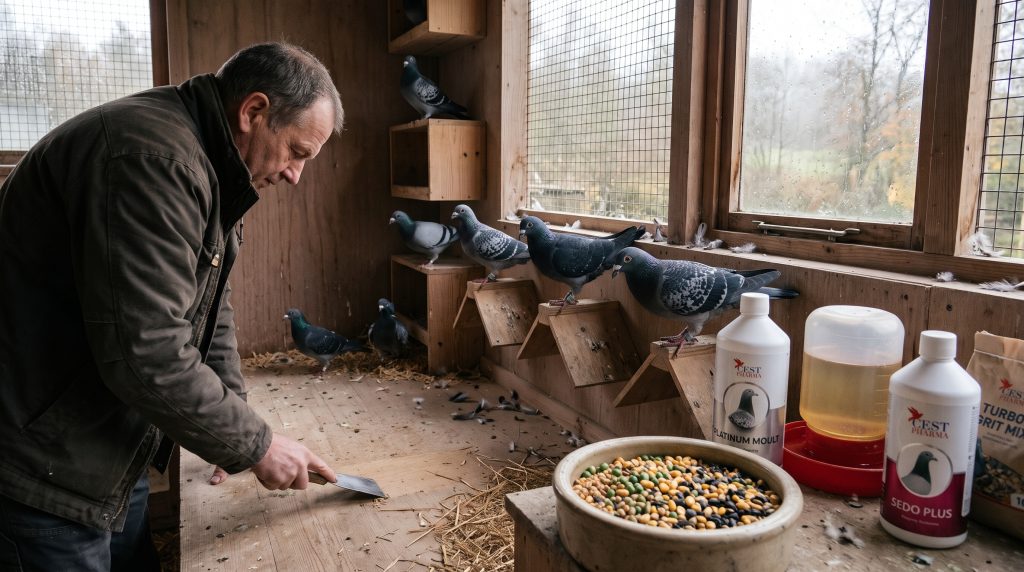
Under these difficult weather conditions, the fancier’s vigilance and rigorous hygiene become the first line of defense in maintaining optimal health. Frequent cleaning of the compartments is strictly mandatory during damp weather, as accumulated droppings absorb moisture from the air, ferment, and release ammonia fumes that irritate the respiratory tract and make the birds vulnerable to infections. Keeping the floor as dry as possible, alongside proper ventilation that allows air circulation without creating direct drafts at perch level, helps pigeons conserve energy and maintain the vitality needed to successfully cope with the temperature fluctuations typical of late autumn.
Even though the moult is nearing its end, the mistake many fanciers make is prematurely reducing nutritional support, forgetting that the last primary flights and cover feathers require impeccable resources to grow supple, rich, and resilient. During this phase, administering products rich in sulfur-containing amino acids—especially methionine and choline—two or three times a week remains fundamental both for feather quality and for liver protection and detoxification. In this regard, using Sedo Plus or, even more effectively in this final stage, the supplement Platinum Moult—which provides an increased and concentrated dose of methionine and choline—ensures the perfect finish to the plumage and complete hepatic recovery after months of intense metabolic effort.
Alongside liquid or feed-applied support, the foundation of ironclad immunity and silky plumage starts in the feeding trough and with a constant supply of minerals. The feed during this period must be complex and perfectly balanced, harmoniously combining the carbohydrates needed to maintain body temperature with high-quality proteins and a generous supply of oilseeds. Healthy fats from oilseeds not only provide energy, but also give the feathers that natural sheen and water-repellent quality so necessary on damp days. At the same time, pigeons must have free access to a fresh mixture of minerals and grit, with the combination of Vitamineral and Turbogrit Mix being ideal to ensure optimal seed digestion, as well as the intake of calcium, trace elements, and essential vitamins to strengthen the skeletal system and the structure of the new plumage.
Once the moult is completely finished and the birds enjoy high vitality, this late-autumn rest window represents the ideal strategic moment for medical prevention, particularly against salmonellosis (paratyphoid). The Salmonella bacterium can remain latent in the bodies of apparently healthy pigeons and frequently activates under the stress of humidity, cold, or later during the pairing period, compromising fertility and squab viability. Carrying out a well-targeted preventive treatment for salmonella during this period, followed—where the prophylaxis schedule and loft history require it—by specific vaccination after restoring the intestinal flora, guarantees a clean breeding and racing team, ready to enter winter and the new breeding season at maximum potential.