Categories
Breeding

Securing a Clean Nest for the Next Generation

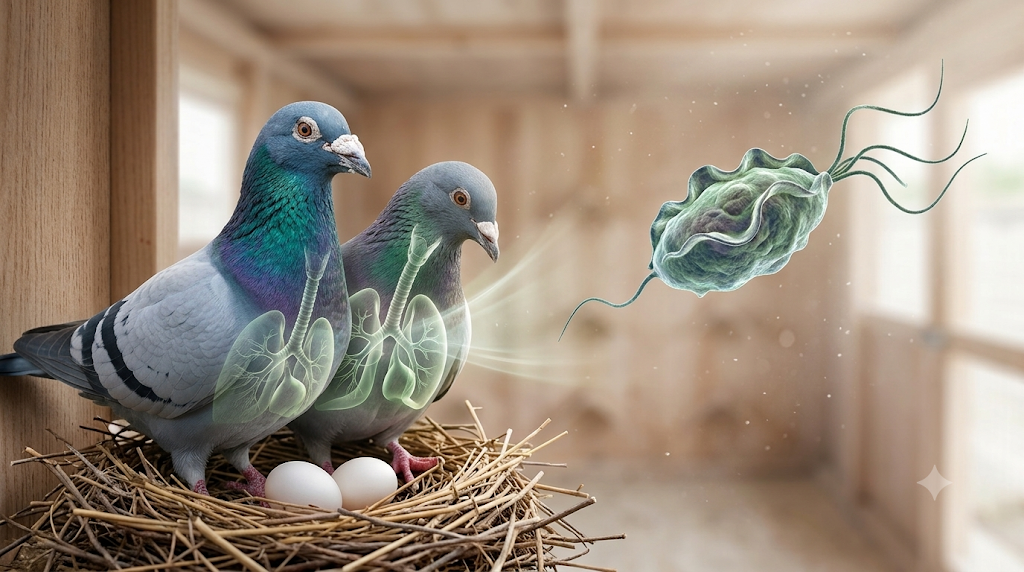
In the world of bird breeding, timing is everything. While many experts advise against “blindly” medicating healthy birds, there is one strategic window that veteran breeders and avian specialists often treat as a critical exception: the incubation period.

Treating breeding pairs while they are “sitting on the eggs” is a preventative maneuver designed to break the cycle of infection before the first chick even hatches. By cleaning the parents of latent pathogens during this time, you ensure the younglings are born into a “clean nest” environment.

The Canker Threat: Protecting the Younglings

The primary target of this regimen is Canker, a disease caused by the protozoan parasite Trichomonas gallinae. While adult birds can often carry small amounts of these trichomonads without showing signs of illness, the parasite is devastating to “younglings” (squabs or chicks).

Because parents feed their young via regurgitation (such as “pigeon milk”), any latent canker in the parent is passed directly to the vulnerable offspring. If left untreated:

  • Outbreaks in the nest: Chicks may develop yellow, “cheesy” growths in the throat that lead to starvation or suffocation.
  • Navel Canker: The parasite can enter through the unhealed navel, causing internal organ failure.
  • Stunted Growth: Even mild infections force the young bird’s immune system to work overtime, diverting energy away from growth and development.

Killing Two Birds with One Stone: The Airway Regimen

The text highlights an important secondary step: pairing the canker treatment with an airway regimen. In many lofts and aviaries, canker often exists alongside “latent” respiratory infections (such as Mycoplasmosis or Ornithosis).

If a breeder establishes that a parent’s airways are “not optimal”—perhaps through a slight rasp, watery eyes, or a discolored cere—they may administer a respiratory treatment (often involving antibiotics like Doxycycline or Tylosyne) alongside the canker medication.

Why treat both at once?

 * Reduced Pathogen Load: Young birds have no built-in immunity. By clearing both the digestive (canker) and respiratory (airway) systems of the parents, you minimize the “pathogen burden” the chicks must fight.

 * Parental Stamina: Raising young is physically exhausting. Parents with clear airways can breathe and forage more efficiently, ensuring they provide better care and more consistent feeding.

Why Medicate “On the Eggs”?

The reason this specific time is chosen is purely tactical. Treating birds before they hatch ensures that the medication has finished its course and the pathogens are cleared by the time the parents begin producing milk and feeding.

Medicating while feeding youngsters is riskier, as the high water intake of feeding parents can lead to overdosing the chicks, and some medications can interfere with the development of the young birds’ feathers or skeletal structure.

Summary of the “Clean Nest” Strategy

  • Observation: Check parents for signs of “wet” eyes, dirty ceres, or slow crop clearing.
  • Timing: Start the regimen once the birds have been sitting on their eggs for a few days.
  • Medication: Use a targeted nitroimidazole (like Ronidazole or Metronidazole) for canker, and if necessary, a compatible respiratory antibiotic for the airways.
  • Goal: To ensure that when the eggs crack, the parents are at peak health, offering the younglings the best possible start in life.

Disclaimer: Always consult with an avian veterinarian before beginning a medicinal regimen. Overuse of antibiotics can lead to drug resistance, and specific dosages vary by species and environment.

Categories
Breeding Immunity system

Imunoferm – Strengthening the immun system

Rich in nutrients that strengthen immunity: vitamin C, probiotics: Saccharomyces cerevisiae and Bacillus subtilis, highly absorbable minerals: zinc, iron, copper and natural extracts with powerful anti-infective properties: Cinnamon oil, Cinnamomum zeylanicum

Immunity is a complex and remarkable system that plays an essential role in protecting the body from various harmful invaders, including bacteria, viruses and other pathogens. It is a defense mechanism formed by a real network of organs, cells and proteins that defend the body against infections, while protecting the body’s own cells. Thus, once a threat is identified, the immune system uses various mechanisms to destroy and eliminate the invaders. This may involve the release of chemicals, the engulfment of pathogens by immune cells and the activation of other immune components.

To maintain a healthy immune system, it is essential that the diet is balanced, rich in vitamins, minerals and antioxidants. Nutrients such as vitamin C, vitamin D, zinc, and probiotics play vital roles in supporting immune function.

Iron is important for the production of healthy red blood cells, and iron deficiency can cause anemia. In addition, recent studies have shown that iron plays another key role: it regulates the immune system, especially in the gut. Iron is absorbed into immune cells in the gut, regulates these cells, and influences intestinal immune responses during infections.

This relationship explains the weakened immune response in anemia and the increased susceptibility to infections because these immune cells in the gut are compromised due to iron deficiency.

https://ufhealth.org/news/2023/uf-researchers-discover-iron-plays-key-role-in-immune-system-health

Zinc (Zn) is a vital micronutrient that strengthens the immune system, intervenes in cellular activities, and has a positive effect in the treatment of infectious diseases. A deficiency of Zn can lead to an imbalance in the immune system. This imbalance is especially evident in cases of severe deficiency, where there is a high susceptibility to various viral infections. Zinc ions are involved in the regulation of intracellular signaling pathways in immune cells (the ability of a cell to receive, process or transmit signals with the environment and with itself). Zinc also has anti-inflammatory and antioxidant properties of

Copper is an essential trace element for the body, and changes in copper levels often indicate a pathological state. Thus, copper deficiency significantly affects the development and function of the immune system, increases susceptibility to various pathogens, leads to a decrease in the number and impaired function of neutrophils, reduces the antibacterial activity of macrophages, impairs the ability to produce antibodies, etc. Copper contributes to immunity in two ways: by participating in the development of immune cells and by providing antifungal agents. The “contact kill” toxicity of copper alloy surface materials to clinically relevant pathogens can reduce the transmission of clinically relevant pathogens.

Cinnamomum zeylanicum has antifungal, antibacterial, anti-inflammatory and antioxidant properties. The main components of cinnamon essential oil are trans-cinnamaldehyde, eugenol and linalool. Studies show that cinnamon essential oil exhibits significant inhibitory effects on both Gram-negative and Gram-positive bacteria, such as Salmonella enterica, E. coli, Staphylococcus aureus, and Listeria monocytogenes. It is also considered one of the most beneficial and useful in anti-infective, antifungal or antiviral treatment. Its antimicrobial activities recommend it in numerous pharmaceutical applications.

Probiotics have been defined as “live microorganisms which, when administered in adequate amounts, confer a health benefit on the host”. Probiotics protect against infectious diseases by multiple mechanisms including secretion of antipathogenic substances, competitive exclusion of pathogens, maintenance of mucosal integrity and stimulation of immune responses.

Bacillus subtilis

Endospore formers, such as Bacillus species, are of interest because their spores resist the acidic barrier of the stomach and are stable for long periods of time. Bacilli, considered intestinal commensals, are used as probiotics for the prophylaxis of gastrointestinal disorders, for the prevention of recurrent respiratory infections or as an adjuvant in the administration of antibiotics. Bacillus species have been shown to produce antimicrobial substances, improve intestinal epithelial barrier functions and stimulate cytokines.

Saccharomyces cerevisiae

is known shield especially for its therapeutic efficacy against various gastrointestinal diseases. This probiotic yeast can significantly protect the normal microbiota of the intestine and inhibit the pathogenicity of various digestive infections. Several clinical studies have declared S. cerevisiae a biotherapeutic agent due to its antibacterial, antiviral, anticancer, antioxidant, anti-inflammatory and immunomodulatory properties.

It is an excellent source of protein with a high content of amino acids. S. cerevisiae is also responsible for the formation of glutathione, an important antioxidant used in the pharmaceutical industry. It can enhance its antioxidant properties by increasing the production of phytochemical constituents such as isoflavones.

Activated charcoal

It plays an essential role in maintaining health because activated charcoal binds to toxins, bacteria and mycotoxins (such as aflatoxins), and eliminates them through the digestive tract, thus reducing the absorption of harmful factors into the bloodstream. Adsorption therapy with activated charcoal as an indigestible carrier is one of the important methods to prevent the harmful effects caused by the ingestion of toxic or harmful substances into the body.

Activated charcoal not only binds toxins or organic acids, but also controls pathogenic bacteria and complexes with phenolic compounds in the gastrointestinal tract to prevent interference with enzymatic function and protein digestion.

Activated charcoal has also been shown to control lactic acid concentration and help maintain pH levels and microflora. [Hasan Rüstü Kutlu, Ilknur Ünsal, Murat Görgülü, Effects of providing dietary wood (oak) charcoal to broiler chicks and laying hens, Animal Feed Science and Technology, Volume 90, Issues 3–4, 16 April 2001]

Thus, the use of activated charcoal is recommended for:

– control of pathogenic organisms in the intestines, a very important aspect especially in crowds and in hot periods or areas, where microbial degradation of feed is a major threat

– it is beneficial for intestinal health, stimulates the development of the microbiome and has the role of improving the absorption of nutrients in the intestinal segment

– the beneficial effect on the development of the organism, by improving the feed conversion rate

– increases the performance of laying and egg quality, which will provide the nutrients necessary for the future embryo, contributing to increasing the survival rate of the chicks

– controls the level of ammonia in the pigeons’ habitat, thus optimizing environmental factors, considering that a high level of ammonia in the droppings can affect growth and performance, especially in young animals, and at the same time determines the development of pathogenic bacteria leading to the appearance and maintenance of respiratory and digestive diseases.

Administer 5-10 g/kg of grains, depending on the situation:

– for prevention and for maintaining digestive health: 5 g/kg of grains,

– as an associate in the specific treatment of a disease and in convalescence: 10 g/kg of grains. It is administered throughout the year in courses of 5-7 days, and especially in periods when immunity suffers (autumn, winter, spring, high humidity, extreme temperatures), vaccinations, change of environment, competitions, moulting period.

Categories
Breeding

Complete Nutritional Support for Breeding, Molting and Recovery

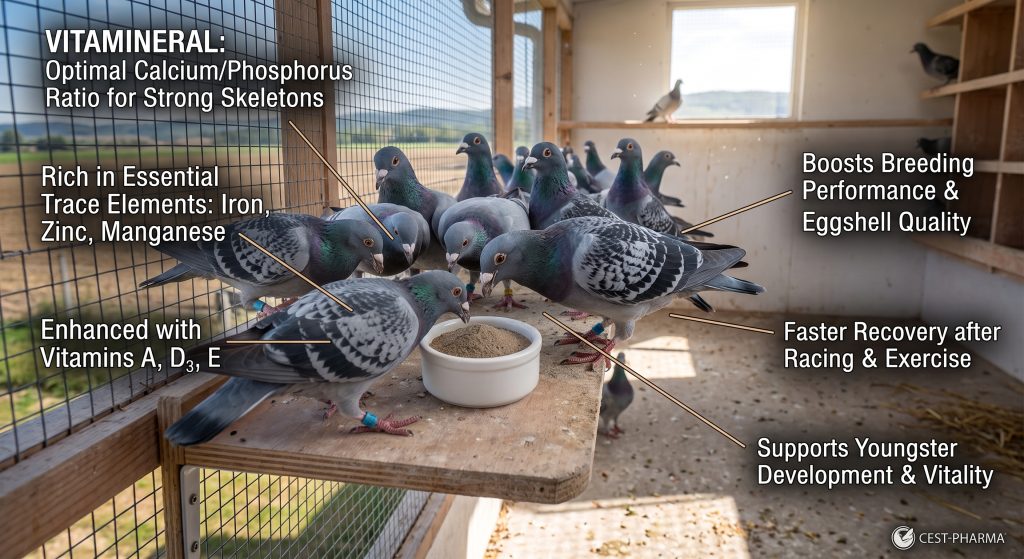
We created this product to be the basis for increasing reproductive performance in pigeons. Its components have the role of protecting and replenishing the body’s nutrient reserves, which is essential during periods of maximum physiological activity (breeding, egg-laying, moulting, etc.), but also in situations of recovery after competitions, illnesses, convalescence, heat stress, transport. To the same extent, it will significantly reduce the state of exhaustion of the body which is always accompanied by massive losses of energy and nutrients.

The natural substances essential to the structure of cartilage, ligaments and tendons (glucosamine, chondroitin, methyl sulphonylmethane) together with the complex of vitamins and minerals, are nutritional elements for the musculoskeletal system and actively intervene in the harmonious development of the skeleton and muscle mass. During molting periods, it contributes to the formation of a healthy, brightly colored and shiny plumage, and after physical exertion, it ensures the restoration of muscle fibers, tissue regeneration and the reduction of inflammatory phenomena.

The probiotics in the composition contribute to the development of beneficial intestinal micro-flora, leading to the formation of a solid microbiome, with a major role in the body’s immunity. The positive effects it generates consist of:

– increasing the absorption of essential nutrients (vitamins, minerals, amino acids, etc.) which will subsequently participate in protein synthesis

– supporting the health of the digestive system by inhibiting the development of infectious microorganisms: E. coli, Salmonella, etc.)

– ensuring good transit and restoring balance after periods of illness. – protecting the body from various infections by strengthening the intestinal barrier, thus blocking the entry of pathogens and unwanted substances into the bloodstream.

Betaine and electrolytes (sodium, potassium, magnesium, chlorine) reduce the negative effects of dehydration on the one hand, and on the other hand, they lead to a decrease in energy requirements through osmoregulation. This is because these nutritional principles have an osmolyte character that protects cells from dehydration by maintaining the balance of water and ions, which is an energy-consuming process. In this way, energy metabolism is made more efficient.

Vitamins: A, D3, E, C, K3, B complex, minerals: magnesium, iron, zinc, manganese, sodium, potassium) contribute to:

– the formation and maintenance of optimal conditions of the skin and mucous membranes.

– the absorption of calcium and phosphorus, essential for maintaining bone health but also for the development of the skeleton in chickens

– the reduction of hemorrhagic lesions that occur as a result of parasites or various infectious diseases.

– Antioxidant role, protects against oxidative degradation, preventing the formation of toxic free radicals and the oxidation of unsaturated fatty acids.

– reducing the risk of diseases by strengthening the immune system,

– contributes to the production of collagen

– maintains the health of blood vessels

– synthesis of blood cells, reduces the risk of anemia, – stimulates metabolic processes.

In addition:

– Potassium is found in erythrocytes, muscles, heart, brain.

– The level of protein assimilated by the body depends on the amount of minerals in the diet. – sodium chloride intervenes in the secretion of proteolytic enzymes, improves appetite and stimulates the digestibility of nutrients.

It is recommended to use:

  • during mating and moulting periods
  • for strong immunity
  • prevention of vitamin and amino acid deficiencies,
  • development of beneficial intestinal flora
  • maintains the health of the skin, mucous membranes and plumage
  • reduces the feeling of fatigue and exhaustion
  • stimulates energy production
  • antioxidant effect, protects against cellular degradation
  • during periods of preparation for competitions and with high risks of illness
  • rapid recovery after intense efforts