Categories
Breeding Moulting Race conditioning

Why Vitamineral is Indispensable in the Modern Racing Loft: Composition, Action, and Seasonal Benefits

In modern pigeon racing, high-performance grains and specialized feed mixtures provide the fuel, but the foundation of health, bone integrity, and metabolic endurance lies in micronutrition. Grains alone are naturally deficient in vital minerals, trace elements, and specific vitamins required during periods of intense physiological stress.

Vitamineral bridges this nutritional deficit. Formulated to provide continuous, ad-libitum mineral-vitamin support, it ensures that racing, breeding, and developing pigeons never run into critical metabolic bottlenecks.
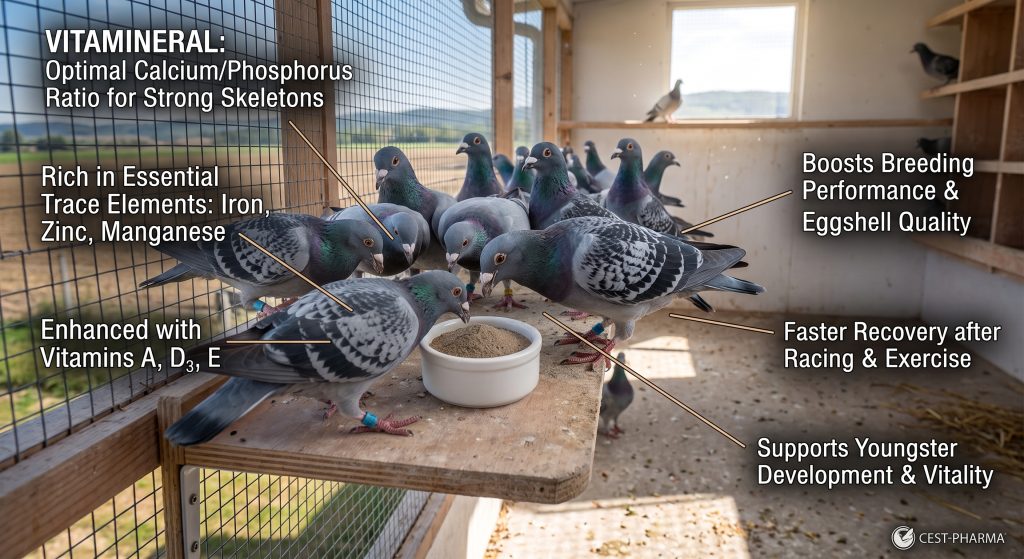
How Vitamineral Works Inside the Pigeon

Unlike liquid vitamins that produce acute, temporary spikes in blood serum levels, Vitamineral delivers sustained micronutrition alongside physical digestion aids:

  1. Gizzard Mechanical Function & pH Buffering: The mineral matrix stays in the digestive tract, aiding the gizzard in grinding hard grain shells while buffering stomach acidity to support beneficial microflora.
  2. Steady Blood-Mineral Homeostasis: Minerals like Calcium and Phosphorus exist in dynamic equilibrium. A deficiency causes the pigeon’s endocrine system to draw calcium directly from the skeleton, rapidly degrading bone density and muscle contraction efficiency. Vitamineral ensures constant, regulated availability.
  3. Bioavailability & Absorption Synergy: Fat-soluble vitamins (A, D3, E) work synergistically with mineral salts. Without Vitamin D3, for instance, intestinal absorption of Calcium drops drastically, regardless of how much grit or chalk is consumed.

Key Active Components & Their Biological Impact

  • Calcium Carbonate & Dicalcium Phosphate: Delivers an optimal Ca:P ratio. Essential for rigid bone structure, strong eggshell synthesis, and the transmission of nerve impulses that drive rhythmic wing beats.
  • Sodium Chloride: Maintains cellular osmotic balance, prevents tissue dehydration under thermal stress, and preserves electrolyte equilibrium during long hours on the wing.
  • Vitamin A: Shields mucosal membranes across the respiratory tract and gastrointestinal lining—acting as the primary physical barrier against trichomoniasis, respiratory infections, and coccidiosis.
  • Vitamin D3: Directly regulates calcium-phosphorus metabolism. Critical for youngsters raised in covered or semi-darkened lofts with limited exposure to direct sunlight.
  • Vitamin E: A potent biological antioxidant that neutralizes free radicals produced by lipid oxidation during prolonged flight, protecting muscle fibers from micro-tears and cramping.
  • Essential Trace Elements (Iron, Zinc, Manganese, Copper):
    • Iron: Drives hemoglobin synthesis, maximizing oxygen-carrying capacity in the blood.
    • Zinc & Copper: Catalyze enzyme systems responsible for feather keratin synthesis and tissue repair.
    • Manganese: Protects tendon elasticity and joint mobility under high aerodynamic loading.

Phase-by-Phase Application in the Loft

1. The Breeding Season

During lay, a hen mobilizes significant calcium reserves in just 24–48 hours to coat both eggs. If dietary calcium is lacking, she extracts it from her sternum and long bones, leading to soft-shelled eggs, egg-binding, or rapid physical decline. Vitamineral provides the direct raw materials for flawless shell calcification and peak fertility in cocks.

2. Youngsters in the Nest & Weaning

The skeletal frame of a squab grows faster in its first four weeks than at any other point in life. Constant access to Vitamineral prevents crooked keels (rickets), ensures rapid ossification of long bones, and establishes robust plumage quality from the first set of primary flights. At weaning, it encourages independent feeding behavior and eases nutritional stress.

3. The Racing Season

Pigeon flight relies on fatty acid oxidation, generating massive cellular waste and placing intense strain on neuromuscular signaling.

  • Pre-Race: Replenishes mineral reserves without overloading the digestive system with unnecessary bulk or water weight.
  • Post-Return: Accelerates rehydration and restores electrolyte balance, returning muscle tissue to a relaxed, non-contracted recovery state.

Administration Protocol

  • Method: Provide fresh in small, clean pots inside the loft, protected from moisture and dust. Pigeons have an innate sensory appetite for minerals and will consume exactly what their bodies require.
  • Availability: Keep it accessible throughout the entire year, replacing it every 1–2 days to ensure it stays dry, aromatic, and palatable.
Categories
Race conditioning

L-Carnitine in Racing Pigeons: The Key to Fitness Without Losing Vital Energy Reserves

In the pursuit of peak performance, racing pigeon fanciers are constantly looking for ways to improve endurance, recovery, and overall condition. Among the supplements that have gained significant popularity in recent years, L-carnitine stands out as one of the most valuable tools for supporting athletic performance. Products such as Top Form from Cest Pharma, which contains 100 mg of L-carnitine, have become an important part of many successful racing programs. However, while the benefits of L-carnitine are undeniable, understanding how to use it correctly is essential for achieving the best results.

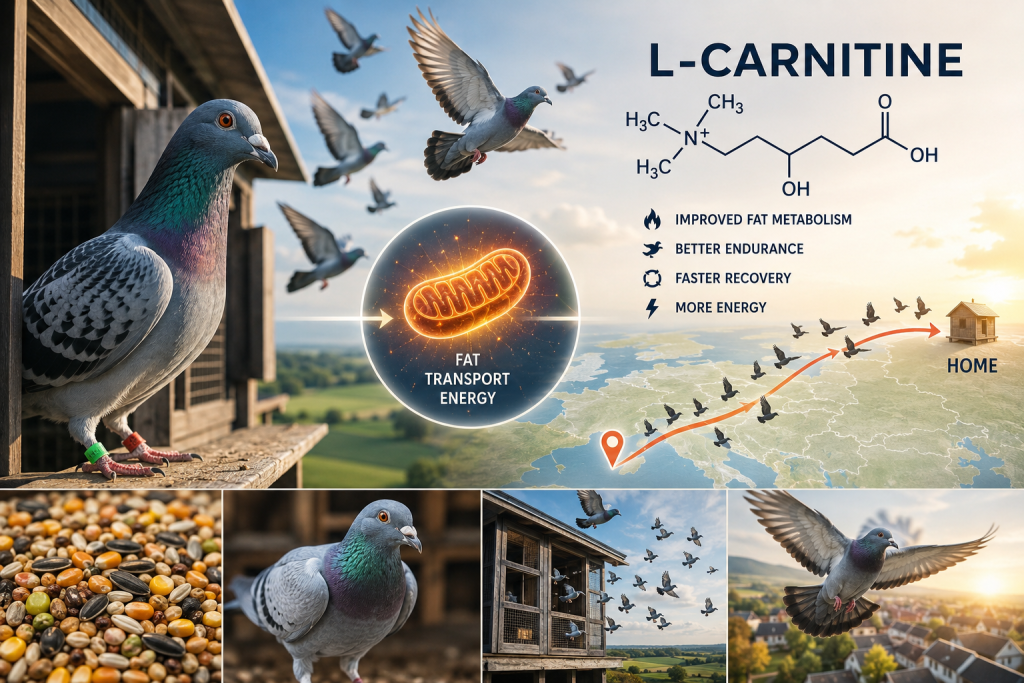
L-carnitine plays a crucial role in the body’s energy production system. Its primary function is to transport fatty acids into the mitochondria, often referred to as the powerhouses of the cell, where these fats are converted into usable energy. For racing pigeons, this process is particularly important because long-distance flight relies heavily on fat metabolism. The more efficiently a bird can utilize fat as an energy source, the longer it can maintain its performance during demanding races.

When used as part of a proper conditioning program, L-carnitine can significantly improve endurance. Pigeons are able to access and utilize their energy reserves more efficiently, allowing them to sustain prolonged periods of flight with less fatigue. Many fanciers also notice that birds receiving L-carnitine recover faster after races and training sessions. Instead of remaining exhausted for extended periods, they often regain their vitality more quickly and are ready for the next challenge sooner.

One of the reasons L-carnitine has become so popular is its ability to help pigeons achieve a lean, athletic condition. Birds often develop tighter muscles, a smoother feather quality, and a more refined body shape. However, this is where many fanciers can make a costly mistake. There is an important difference between a pigeon that is fit and a pigeon that is simply too thin.

Because L-carnitine enhances the utilization of fats for energy, birds can gradually burn through their reserves if their nutritional intake is not adjusted accordingly. A pigeon may appear exceptionally light and athletic, leading the fancier to believe it is in perfect condition, while in reality it may be lacking the energy stores required for peak performance. This situation is particularly common when birds are maintained on light depurative mixtures for too long while receiving supplements designed to increase fat metabolism.

A racing pigeon should not be judged solely by its weight. The ideal racing pigeon is one that combines fitness with sufficient energy reserves. During competition, especially in middle-distance, long-distance, and marathon events, the bird depends on stored fats as its primary fuel source. If these reserves are insufficient, the pigeon may begin the race in excellent condition but struggle to maintain its pace during the later stages of the journey. In such cases, a bird that appears perfectly prepared in the basket may lack the fuel necessary to finish strongly.

This is why feeding management becomes critically important when using L-carnitine. The supplement does not create energy on its own; it simply helps the body utilize available fats more effectively. To maximize the benefits of carnitine, pigeons must receive adequate sources of dietary energy, particularly during the days leading up to a race. High-quality fats and energy-rich grains provide the raw materials that L-carnitine can convert into sustained performance.

Seeds and grains such as peanuts, hemp, safflower, sunflower hearts, flaxseed, rapeseed, maize, and milo can play an important role in maintaining proper energy levels. These ingredients help build the reserves necessary for demanding flights and ensure that birds do not become excessively lean during the racing season. Rather than fearing dietary fats, successful fanciers understand that these nutrients are essential components of endurance racing when provided in appropriate amounts.

The balance between conditioning and feeding becomes even more important as race distances increase. In sprint races, pigeons rely more heavily on carbohydrates and explosive power. As race distances become longer, however, fat metabolism becomes increasingly important. This is where L-carnitine can truly demonstrate its value, helping birds efficiently utilize their energy reserves throughout the journey. Nevertheless, the greater the emphasis on fat metabolism, the more important it becomes to ensure that adequate reserves are available before basketing.

Experienced fanciers often learn to recognize the warning signs of a pigeon that has become too lean. A pronounced breastbone, loss of muscle volume, reduced vitality, or difficulty recovering after exercise may indicate that the bird is burning more energy than it is receiving through nutrition. In these situations, increasing the energy density of the feed is often more beneficial than increasing training intensity.

When incorporated into a well-balanced racing program, Top Form from Cest Pharma can be a valuable ally in developing superior athletic condition. The 100 mg of L-carnitine helps optimize energy metabolism, supports endurance, and contributes to faster recovery. However, the greatest results are achieved when supplementation is combined with intelligent feeding practices that provide adequate fats and energy-rich nutrients. Ultimately, the goal of every racing pigeon fancier should not be to produce the lightest pigeon in the loft. The goal is to produce a pigeon that is fit, muscular, healthy, and fully equipped with the energy reserves needed to perform at its highest level. L-carnitine can help unlock a bird’s athletic potential, but only when it is supported by proper nutrition. The most successful racing pigeons are not those that have burned away every reserve of fat; they are the birds that strike the perfect balance between fitness and fuel, allowing them to return home ahead of the competition.