


 English
  Romanian
  Portuguese
  Polish
  Italian
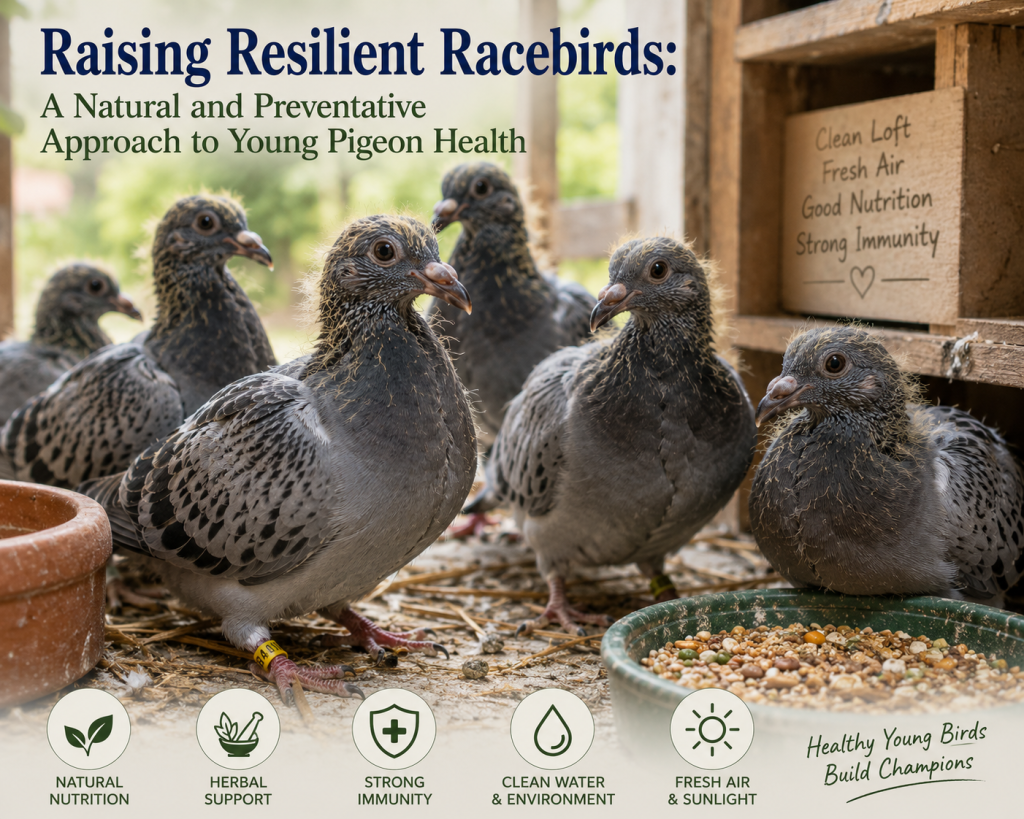
Successful breeding is only the first step in a pigeon fancier’s journey. Ensuring that young pigeon’s transition seamlessly from the nest to the flight stage requires a delicate balance of biological nurturing and timely preventative medicine. By focusing on building natural gut immunity and implementing a strategic vaccination protocol, you can minimize reliance on antibiotics and set your younglings up for optimal racing performance.
1. Nurturing the Gut: The First Line of Defense
A young pigeon’s intestinal flora is immature, meaning the use of antibiotics goes heavily against its natural development. The ideal approach favors a natural regimen over the medicine jar for as long as possible. To ensure a clean hand-off, parent pigeons should undergo their canker regimen while on the eggs, but if you are ever in doubt, it is best to check the droppings and have a throat smear taken. Providing younglings with a special acidifying herbal drink stimulates the good intestinal flora and contributes to proper immune system development in the intestine, making it highly effective when severe infections occur. To do this perfectly, start with probiotics to get the intestinal flora in top shape so the birds can get through the stressful post-deposition period in the best way. If they are affected by mild childhood illnesses, experience shows it is best to let them romp with it while administering the herbal drink regimen for a week, followed by applications two to three times a week to keep them in optimal shape and avoid antibiotics during growth.
2. Strategic Vaccinations and Immune Support
While natural gut health is paramount, viral threats require a robust medical defense, and advising early vaccination against diseases is essential. Fanciers should prefer vaccination with the available combination vaccine against the herpes virus and the paramyxo virus. These shots should be administered when the younglings are five and eight weeks old. The advantage of these early vaccinations is that if the younglings are affected by the circo virus, they have already developed proper protection against the paramyxo virus and herpes virus. A lot of fanciers claim to have much fewer problems with the airways of young pigeons after this double vaccination. Furthermore, shots against paratyphus are recommended for lofts with a history of the disease, as vaccinating against these illnesses ensures we no longer burden the immune system of the pigeons. Finally, vaccinating the flock against smallpox is also no luxury.
3. Pre-Flight Screening: Catching Hidden Infections Normally, you will be able to get the young pigeons to the flight stage without many problems, but proactive screening is vital. In this context, it is highly important to check the pigeons or have them checked about fourteen days before the flights for dormant conditions that could possibly cause problems during training. These include general diseases such as coccidiosis, worms, and trichomoniasis. In young pigeons, we should also check to see whether hexamita could cause problems. It is furthermore important to assess whether the young pigeons carry hidden infections of the airways with them, because without much else besides the aforementioned, the young pigeons should be able to successfully participate in flights. In case of hidden infections, timely action can be taken so they no longer fall behind.